
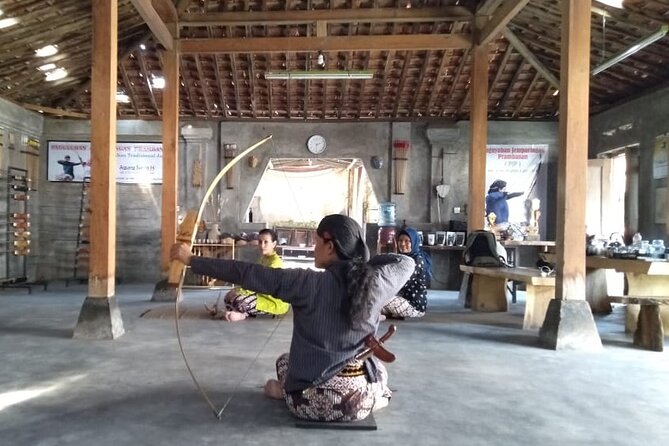
Reviewed · YOGYAKARTA BATIK & SILVER WORKSHOPS
Traditional Javanese Archery Class
Jemparingan feels like stepping into a craft. In this Traditional Javanese Archery Class, I love the seated archery technique and the chance to learn it from Mr. Agung, a national archer from Yogyakarta. The main drawback to consider is the moderate fitness needed for the seated practice, so don’t expect a fully laid-back activity.
I also like that it’s short—about 1 to 2 hours—and kept to a small group size of up to 10 people. For $27 per person, it’s a solid value because you’re paying for coaching and technique, not just a quick demo.
You’ll meet the guide near Prambanan Temple’s parking area, then be guided to the Jemparingan practice location, and the activity ends back at the starting meeting point. One more thing: the class requires good weather, so plan on flexibility if conditions are rough.
In This Review
- Key Highlights You’ll Care About
- Why Jemparingan Near Prambanan Feels So Practical
- Meet Mr. Agung and Get Real Coaching Time
- The Seated Jemparingan Stance: What You’re Actually Learning
- From Prambanan Parking Area to the Jemparingan Place
- Tools, Technique, and the Fast Path to Feeling Good
- Price and Value: Is $27 Worth It?
- Weather Matters More Than You Think
- Who This Class Suits Best (And Who Should Adjust Expectations)
- Should You Book This Traditional Javanese Archery Class?
- FAQ
- Where do I meet for the Traditional Javanese Archery Class?
- How long does the archery class take?
- How much does it cost?
- Is there a limit on group size?
- What level of fitness do I need?
- Do I need to print a ticket?
- When will I receive confirmation after booking?
- What happens if the weather is bad?
- Can I cancel for a full refund?
Key Highlights You’ll Care About

- Jemparingan, a seated archery style tied to Javanese court protection and practical guardian/sniper roles
- Mr. Agung’s national-athlete background, giving you instruction that focuses on technique, not theory
- Small group limit (max 10), which usually means more attention as you learn
- Prambanan-area meet-up, so you can pair this with your Yogyakarta sightseeing without complex routing
- Mobile ticket and a short, contained session that fits easily into a day plan
Get hands-on with more batik and silver workshops in Yogyakarta
- Kotagede Royal Route – Cycling Tour★ 5.0 · 207 reviews
- Yogyakarta Cooking Class and Market Tour★ 5.0 · 99 reviews
- Traditional Javanese Archery Class★ 5.0 · 13 reviews
Why Jemparingan Near Prambanan Feels So Practical
Yogyakarta is full of performances and cultural stops. This one is different because you’re not just watching a tradition—you’re learning the body mechanics behind it. Jemparingan (traditional Javanese archery) uses a specific seated position, and that stance isn’t random. It connects to the way the technique was used for guarding or shooting needs in the Kraton of Yogyakarta.
What I like about learning it this way is that history doesn’t stay in the museum. You can feel why a seated posture matters: it changes balance, timing, and how you anchor your shot. Even if you’re a total beginner, you start understanding the logic fast—because your body is the lesson.
Starting the experience in the Prambanan area also helps. You get your bearings in a famous place, then you move to the practice setting to do the real work. It keeps the day from feeling like one long transit shuffle.
Meet Mr. Agung and Get Real Coaching Time
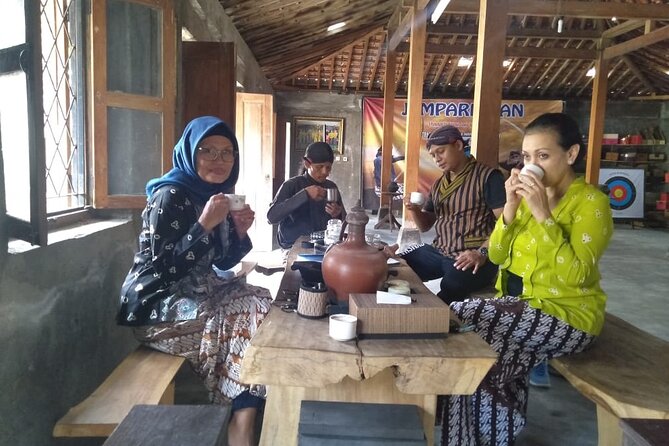
This class is led by a professional traditional archer, Mr. Agung, who is listed as one of the national athletes from Yogyakarta. That matters more than it sounds. In archery, small details are everything: posture, how you hold and aim, and how you repeat the movement without rushing.
A session capped at 10 participants also changes the vibe. With a small group, the instructor can correct common mistakes sooner—like how people tend to shift their weight or lose their aim while they’re still figuring out the seated stance. You’re not competing for attention, and the class rhythm stays focused.
One more reason this coaching structure is valuable: Jemparingan isn’t just a modern sport variation. It’s a preserved technique with Javanese philosophies attached to the seated position. Having an instructor who can explain the meaning while you practice helps you connect the why to the how. That’s when the technique clicks.
The Seated Jemparingan Stance: What You’re Actually Learning
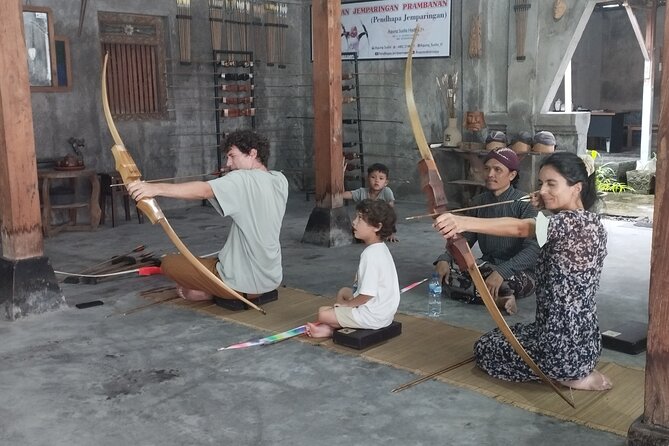
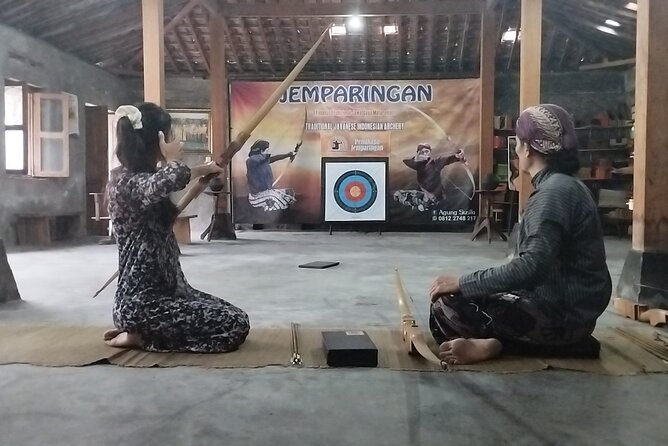
The big event here is learning Jemparingan properly—specifically the sitting position. The activity includes an introduction to the technique, plus practice under guidance so you can use the traditional tools in the right way.
You’ll get two layers of learning:
1) The practical layer: how to sit, how to handle the traditional archery tools, and how to aim using the seated technique.
2) The philosophy layer: Mr. Agung shares the Javanese thinking connected to that posture—why the position is used and what it represents.
That combination is what turns this from a novelty activity into a real skill attempt. Archery classes often fall into either extremes. Some are only technical, with little context. Others are only cultural storytelling, where you never get to try the thing. Here you get both—without the whole session turning into a lecture.
And yes, the seated position is the consideration you should take seriously. It’s part of what makes Jemparingan distinct, but it also means you’ll be holding and repeating a stance. If you have tight legs or issues with getting comfortable sitting for a while, you’ll want to plan accordingly. Moderate physical fitness is recommended, and that’s for a reason.
From Prambanan Parking Area to the Jemparingan Place
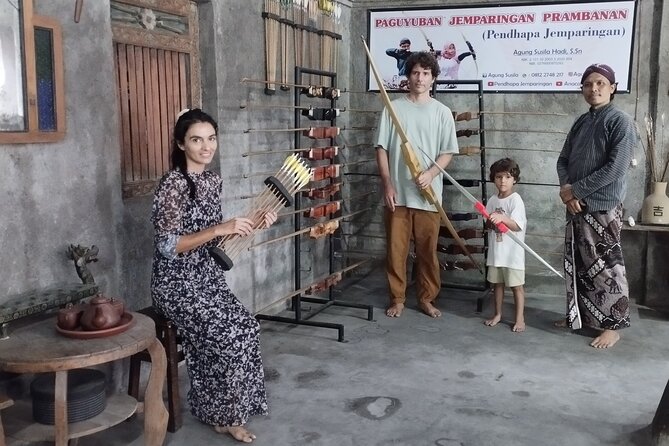
The meeting flow is simple, which I really appreciate when you’re already juggling a travel day. Your guide meets you at the parking area of Prambanan Temple, and then accompanies you up to the Jemparingan practice location.
So you’re not left wandering to find the right spot. The guide bridges the gap between the sightseeing area and the actual class setting. Once you reach the practice place, the class runs and then finishes back at your starting meeting point.
Also note the location details: the listed start and end point is Pendhapa Jemparingan Cageran, Tamanmartani, Kec. Kalasan, Kabupaten Sleman, Daerah Istimewa Yogyakarta 55571, Indonesia. If you’re mapping the day, it helps to keep that in mind even if you begin at the Prambanan parking area.
Another practical plus: it’s described as near public transportation. That doesn’t mean it’s right at the doorstep of every stop, but it’s a good sign for independent planning in Yogyakarta.

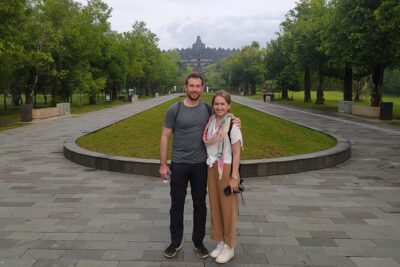
Tools, Technique, and the Fast Path to Feeling Good
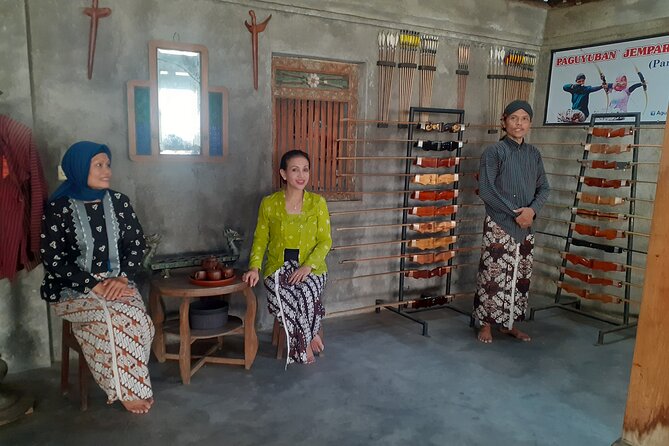
You’re paying for hands-on time, and the structure is built for that. The class emphasizes learning how to use the traditional archery tools properly, led by a professional traditional archer.
When people get excited about archery, it’s usually because they want the moment they actually shoot. Here, you’re not just holding a bow and hoping. The instruction focuses on using the traditional approach in the correct seated style, which typically makes your learning feel quicker and more grounded.
The vibe also matters. The experience has strong ratings—5 out of 5 with a 100% recommendation—and the most common praise points toward a fun atmosphere and a sense that this is a special local variation, not a generic activity. You should expect friendly guidance while you get the technique under control.
If you’re nervous about being clumsy, don’t be. This is exactly the kind of class where the instructor can correct your stance and help you repeat the movement. The short duration (1–2 hours) is a clue that the goal is momentum, not a long, slow grind.
Price and Value: Is $27 Worth It?
$27 per person is not a bargain price, and it’s not a premium, fancy-package price either. So the question is value: what you get for the money.
Here’s what supports the value:
- Professional instruction from Mr. Agung (a national archer background is specifically noted)
- Small group size (max 10), which usually translates into more coaching attention
- A focused time window (about 1–2 hours), so you’re paying for an actual active session
- A cultural skill, not just a photo moment—Jemparingan is taught as a proper technique with philosophy and practice
If you’ve ever paid for “cultural experiences” that end up being mostly watching, this is the opposite. You’re actively learning a technique that’s tied to Javanese court guardianship and still preserved as cultural practice.
Also, it’s typically booked about 6 days in advance on average. That’s often a sign it’s not the kind of activity you can ignore until the last minute without risking a sold-out slot—especially since the group cap is small.
Weather Matters More Than You Think
This experience requires good weather. If it’s canceled due to poor weather, you’ll be offered a different date or a full refund.
Translation: don’t plan this as the one activity that must happen no matter what. Build some breathing room around your schedule. If you’re visiting during a rainy stretch, it’s smart to keep your other Yogyakarta plans flexible too, so a reschedule doesn’t derail your day.
Who This Class Suits Best (And Who Should Adjust Expectations)
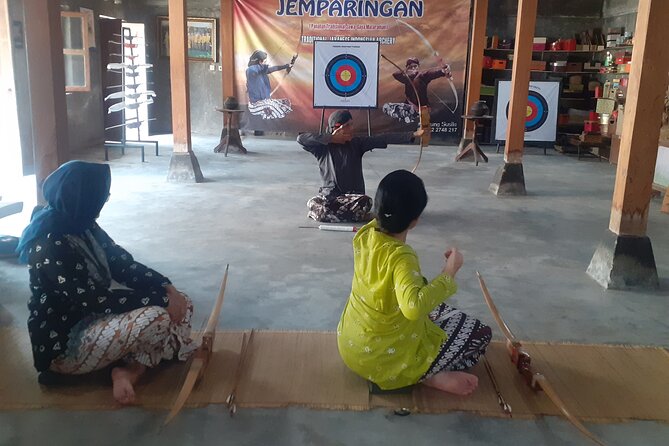
This activity is best for people who want a hands-on cultural skill with a clear technique focus. You don’t need to be an athlete, but the seated nature and tool use mean it’s best with moderate fitness.
It fits especially well if:
- You enjoy practical learning, not just sightseeing
- You like the idea of trying Jemparingan specifically (the seated technique is the point)
- You want a short, well-led activity that pairs nicely with Prambanan-area plans
You might want to reconsider if:
- Sitting for stretches is uncomfortable for you
- You’re looking for something purely observational
- Your schedule is locked tight and you can’t handle a potential weather-based change
Should You Book This Traditional Javanese Archery Class?
If your goal is to learn something real—using a traditional technique with professional guidance—then yes, I’d book it. The combination of Mr. Agung’s instruction, the small group cap, and the uniquely seated Jemparingan style makes it feel like more than a standard “try archery” stop.
You should especially book if you want an authentic Yogyakarta cultural activity that doesn’t waste your time. For $27, you get a focused 1–2 hour session aimed at proper technique, not just a brief taste.
One last check before you go: choose a day with decent weather, and be ready to sit and practice a stance as part of the learning.
FAQ
Where do I meet for the Traditional Javanese Archery Class?
Your guide meets you at Prambanan Temple’s parking area, and then accompanies you to the Jemparingan practice location. The activity ends back at the meeting point.
How long does the archery class take?
The experience lasts about 1 to 2 hours.
How much does it cost?
It costs $27.00 per person.
Is there a limit on group size?
Yes. The class has a maximum of 10 participants.
What level of fitness do I need?
You should have a moderate physical fitness level.
Do I need to print a ticket?
No. You’ll use a mobile ticket.
When will I receive confirmation after booking?
Confirmation is received at the time of booking.
What happens if the weather is bad?
The experience requires good weather. If it’s canceled due to poor weather, you’ll be offered a different date or a full refund.
Can I cancel for a full refund?
Yes. Cancellation is free up to 24 hours in advance for a full refund. Canceling within 24 hours does not provide a refund.
More Yogyakarta Batik and Silver Workshops
- Kotagede Royal Route – Cycling Tour
★ 5.0 · 207 reviews - Batik Master Class with Full Process
★ 5.0 · 103 reviews - Yogyakarta Cooking Class and Market Tour
★ 5.0 · 99 reviews
More Yogyakarta Tour Reviews Worth Reading
- Borobudur Sunrise from setumbu Hill , Merapi Volcano & Prambanan Full Day Tour
★ 5.0 · 1,030 reviews - Borobudur Temple Climb To The Top & Prambanan Temple – 1 day tour
★ 5.0 · 638 reviews - Menoreh Village Cycling
★ 5.0 · 611 reviews
Not quite the one? Here is more to do around Yogyakarta, freshly reviewed by us

Yogyakarta Batik & Silver Workshops, compared.
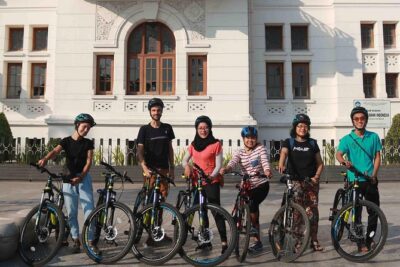 ★ 5.0Kotagede Royal Route – Cycling TourFrom $57207 reviews
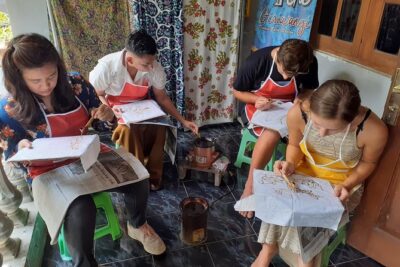 ★ 5.0Batik Master Class with Full ProcessFrom $19103 reviews
 ★ 5.0Yogyakarta Cooking Class and Market TourFrom $3599 reviews
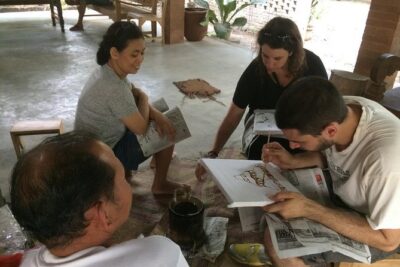 ★ 5.0Borobudur: Village Tour with Pottery and Tofu MakingFrom $7934 reviews
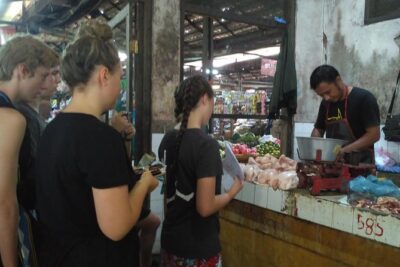 ★ 5.0Kotagede Yogyakarta Heritage Walk TourFrom $356 reviews
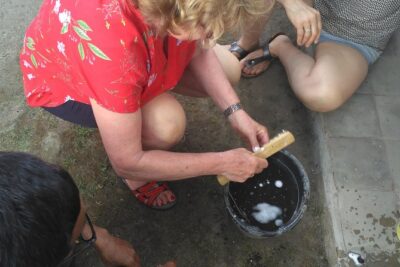 ★ 5.0Kotagede Yogyakarta Silvercrafting Short CourseFrom $474 reviews
Browse the lists this tour appears in