
Reviewed · BOROBUDUR SUNRISE & CLIMB-UP TOURS
Borobudur and Prambanan Tours from Yogyakarta City
Two UNESCO temples in one day sounds great. This private, air-conditioned ride is built for comfort and less hassle, so you can focus on the temples (and the photos) instead of wrestling public transport.
What I like most is the way Borobudur’s time slots help control crowds, so your visit feels less like a moving queue. I also really value the air-conditioned comfort and bottled water, which matters fast once the tropical heat kicks in.
One thing to plan for: entrance tickets aren’t included, so you’ll need extra cash and a little time to sort entry for each site.
In This Review
- Key points to know before you go
- Why this Borobudur–Prambanan pairing works from Yogyakarta
- Price and what $55 actually covers
- Borobudur Temple: time-slot access and architecture you can actually read
- The practical visit rhythm
- Prambanan Temples: Trimurti stonework and the story behind the stones
- What you’ll do on the ground
- The ride between sites: comfort, timing, and not feeling rushed
- Photos and views: more than just temple selfies
- Included extras that actually help (not just add fluff)
- Who this tour is best for
- My booking call: should you book this?
- FAQ
- How long is the Borobudur and Prambanan tour?
- Do I get hotel pickup and drop-off?
- Are entrance tickets included in the price?
- How much are the entrance fees for each temple?
- What’s included besides transportation?
- Is this tour private or shared?
- What’s the cancellation policy?
Key points to know before you go
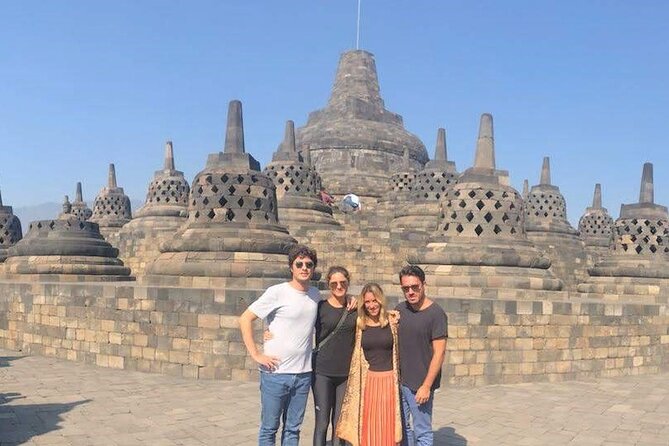
- Two UNESCO sites, one day: You’ll visit Borobudur first, then Prambanan, with about 2 hours at each stop.
- Private vehicle, not a shared scramble: Hotel pickup and drop-off means your day starts and ends on your schedule.
- Crowd control at Borobudur: The monument uses time-slot management, which helps you enjoy the spaces without wall-to-wall people.
- Comfort helps you stay present: Bottled water, air conditioning, and parking fees are included.
- Tickets are your extra cost: Expect to pay separately for Borobudur and Prambanan entry at current rates.
We have more Borobudur sunrise climbs to weigh up around Yogyakarta
- Borobudur Sunrise from setumbu Hill , Merapi Volcano & Prambanan Full Day Tour★ 5.0 · 1,030 reviews
- Borobudur Temple Climb To The Top & Prambanan Temple – 1 day tour★ 5.0 · 638 reviews
- Yogyakarta: Borobudur Top Access & Prambanan Temple Private Tour★ 5.0 · 390 reviews
Why this Borobudur–Prambanan pairing works from Yogyakarta
If you’re based in Yogyakarta, doing Borobudur and Prambanan on the same day is one of the most efficient ways to see major Central Java landmarks without dragging it into two separate trips. Borobudur is more than an hour from the city, and public transport can feel slow and awkward. So even before you reach the temples, the value here is in protecting your energy.
This setup is designed around a private car approach: you’re not trying to coordinate multiple rides, changing buses, or arriving tired and sweaty. You get that classic Java road-trip feel—rice fields, temple silhouettes, and a day that moves, but doesn’t rush you at the sites.
The other big reason this pairing works is contrast. Borobudur is giant, layered, and Buddhist in design language. Prambanan is all about Hindu devotion and big stone forms dedicated to the Trimurti. Seeing them back-to-back helps you understand how different eras shaped Central Java.
Price and what $55 actually covers
The tour price is listed at $55, and what you’re paying for is mostly the practical stuff: private transportation, an excellent driver, air conditioning, bottled water (one bottle per person per day), and parking fees.
Entrance fees are separate. Borobudur’s entry is listed as IDR 455,000 per person. For Prambanan, the info you have shows two figures: IDR 370,000 per person in the stop description, and IDR 400,000 per person in the fee summary. That’s a detail worth confirming at booking, but the key point stays the same—your budget must include both temple tickets.
So how do I think about value? If you’ve got a group and you’d otherwise hire a taxi or ride-hail across long distances, the math can look similar fast—especially once you factor in time wasted on planning and the comfort of having AC the whole way. And if you’re traveling solo or as a couple, this still tends to be worth it because the logistics are handled for you: pickup, drop-off, and the driving.
Borobudur Temple: time-slot access and architecture you can actually read
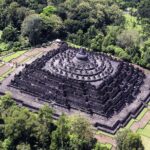
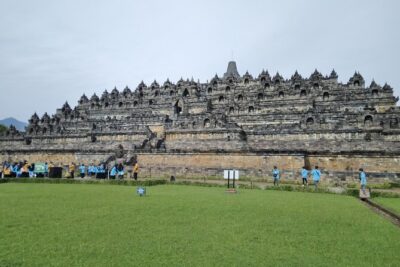
Borobudur is dated to the 8th and 9th centuries, and it’s the biggest Buddhist temple in the world. That headline is true, but what makes it special is the structure. It’s built in three tiers: a pyramidal base with five concentric square terraces, then a cone-like middle with three circular platforms, and finally a monumental stupa at the top.
What I find helpful—especially if you don’t have a background in temple studies—is that you can “walk the idea.” Each layer changes the geometry and the viewpoint. The walls and balustrades carry fine low reliefs that cover a total surface area of 2,500 m². That’s not just decoration; it’s part of how the temple communicates its story.
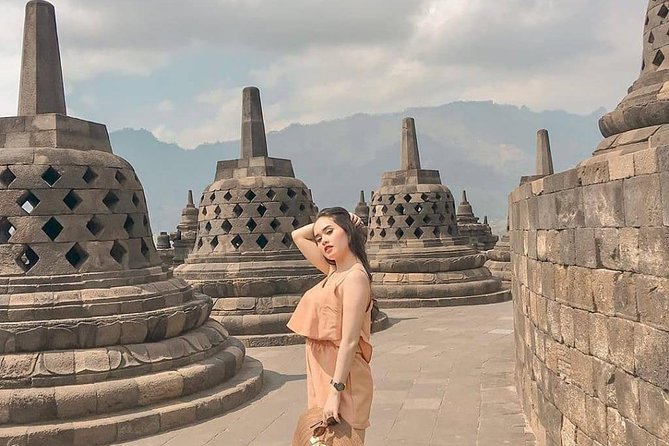
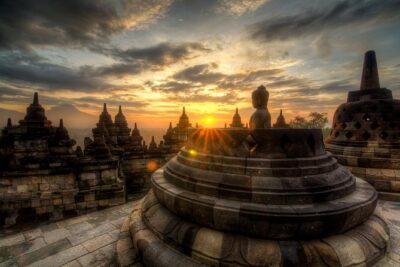
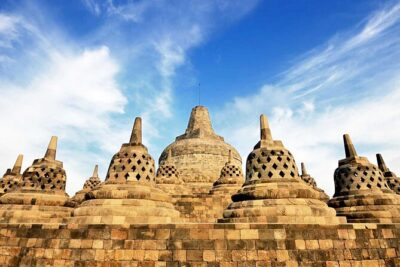
Another detail to notice: around the circular platforms are 72 openwork stupas, and each contains a Buddha statue. Even if you don’t get every symbolic meaning, counting the repeating elements gives your eye a rhythm, and it keeps the visit from turning into one long blur of stone.
Restoration matters too. Borobudur was restored with UNESCO support in the 1970s, which is why the site looks well-preserved rather than disappearing into ruins.
The practical visit rhythm
You’ll spend about 2 hours at Borobudur, and there’s a big advantage here: the site manages visitor flow with assigned time slots and caps the number of people allowed onto the temple. That helps you enjoy the experience without feeling like you’re being pushed through.
If photography is part of your plan, the good news is you’ll have plenty of chances for both wide temple shots and closer compositions as you move through levels. Also, part of the tour concept includes capturing views of the temples plus rice fields along the way—which is one reason this isn’t just an “entry and exit” day.
Tip for your comfort: bring cash for the entry fee and wear something light. You’ll be out in the heat once you’re on site, and while you get bottled water for the day, temple walking still takes effort.
There is more of Prambanan and its temple courtyards to see near Yogyakarta
Prambanan Temples: Trimurti stonework and the story behind the stones
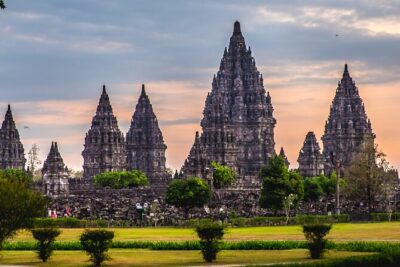
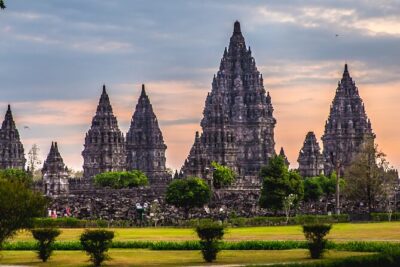
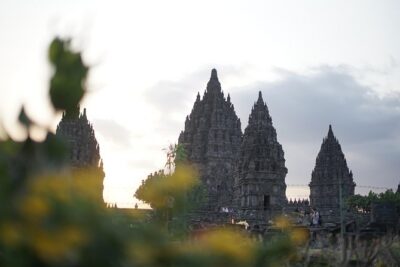
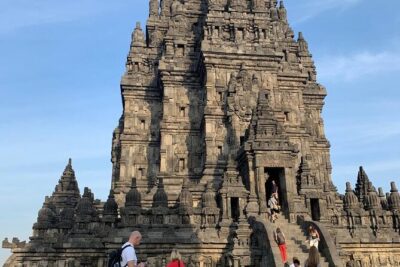
Prambanan is the other UNESCO heavyweight, and it’s completely different in tone. It’s a Hindu temple complex dedicated to the Trimurti—Shiva, Vishnu, and Brahma. Instead of the layered Buddhist geometry of Borobudur, Prambanan feels more vertical and ceremonial.
Here’s the kind of context that makes the visit click. Some historians connect Prambanan’s construction to a political shift in Central Java—part of the Sanjaya dynasty’s answer to the earlier Sailendra dynasty influence visible in nearby Buddhist temples like Borobudur and Sewu. The idea is that Prambanan marked a return to Hindu patronage after almost a century of Sailendra dominance.
Even if you don’t want to argue dynastic timelines in your vacation, that shift is the important takeaway. The temple complex signifies a change in the Mataram court’s support—from Mahayana Buddhism toward Shaivite Hinduism.
What you’ll do on the ground
You’ll spend about 2 hours at Prambanan, and your guide will explain the history as you’re there. With a site like this, the difference between a good and a forgettable visit is whether someone points out what you’re looking at: which temples relate to which gods, and how the complex fits together.
Also, remember that Prambanan entry isn’t included. Plan a moment for ticket handling, and keep your cash/card ready.
Photo tip: Prambanan’s dramatic massing looks fantastic from the right angles. If you’re chasing the big postcard view, don’t rush—give yourself a few minutes to step back, check the light, and then reframe.
The ride between sites: comfort, timing, and not feeling rushed
This tour runs about 8 to 10 hours, which is long enough to feel like a full day, but not so long that it turns into an all-day endurance test. The private car setup is the reason it works. You avoid the frustrating parts of transit—waiting, transfer confusion, and inconsistent schedules—and you can keep your day focused on the temples.
The included air-conditioned vehicle is a real quality-of-life upgrade. Tropical Central Java can be warm, and you’ll appreciate AC as soon as you leave the first site and head out again.
There’s also a subtle timing advantage: because you’re doing it as a private day trip with structured stop durations, you’re not guessing how long each leg should take. You get about 2 hours at each temple, plus driving time, so you arrive at a sensible point rather than feeling like you’re constantly playing catch-up.
One small thing to keep in mind: because tickets are separate, you should expect a little friction at both entrances. That’s normal, but it’s not the kind of hassle you want if your schedule is already tight.
Photos and views: more than just temple selfies
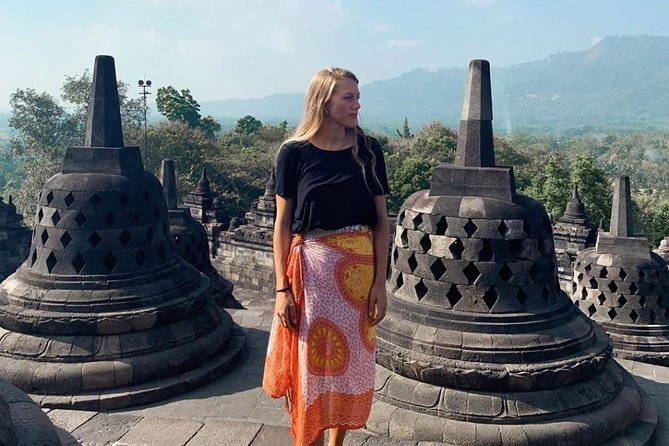
The tour concept explicitly includes chances to capture shots of ancient temples and rice fields. That matters because it turns your day into more than two timed museum stops.
Borobudur gives you the big, layered stone visuals—great for wide-angle compositions that show the pyramid base and terraces. Then you can shift into details as you move through levels, like the openwork stupas. Prambanan, on the other hand, gives you strong temple mass and symmetrical cues that are made for framing and perspective.
If you care about getting good photos without stress, this kind of transport helps. You’re not deciding where to park or worrying about getting lost between sites. Your attention stays on timing your shots and walking at a pace that doesn’t feel like you’re on a moving conveyor belt.
Included extras that actually help (not just add fluff)
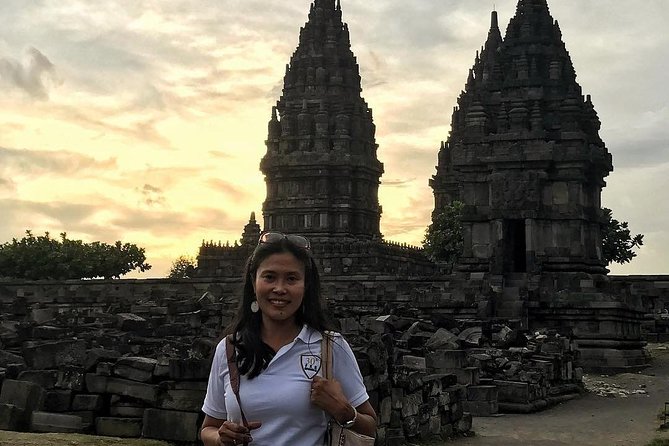
This is a practical tour. The included items aren’t fancy, but they’re useful:
- Bottled water (1 bottle per person/day)
- Private transportation with an air-conditioned vehicle
- An excellent driver
- Parking fees
All of that reduces friction. And with temples, reducing friction is what lets you enjoy the experience rather than constantly managing logistics.
The tour is also private, meaning it’s only your group—no joining random strangers and no dealing with split interests.
Who this tour is best for
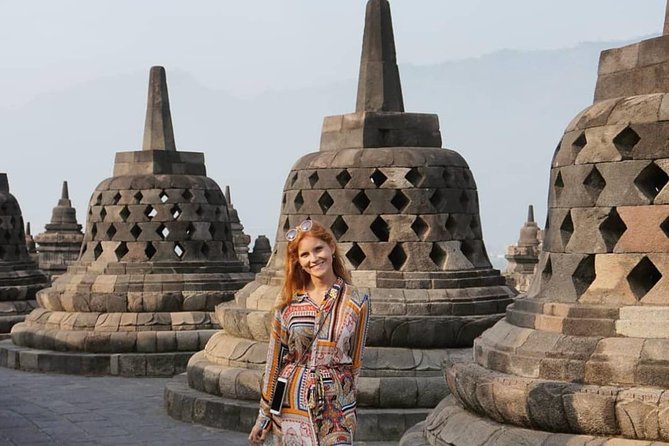
I’d steer you toward this Borobudur and Prambanan private day trip if you want:
- Door-to-door convenience from your Yogyakarta hotel
- A full day that still feels structured (about 2 hours at each site)
- Comfortable transport rather than slow, stressful public transit
- A guide to explain what you’re seeing, not just where to stand for photos
It’s also a solid choice if you’re short on time. Doing both UNESCO sites in one day can be a smart way to maximize a Yogyakarta base.
I’d think twice if you’re the type who loves DIY planning and you’re comfortable sorting your own transport and entry timing. In that case, you might decide it’s not worth paying for the private logistics.
My booking call: should you book this?
Book it if you want a comfortable, low-stress day with private transport and expert guidance at two major UNESCO sites. The strong rating and high recommendation rate (4.9 out of 5) suggest the format works for most people—especially the idea of managed comfort plus structured time at each temple.
Skip it (or adjust your expectations) if you’re trying to keep costs ultra-low. The base price is only part of the total; you must budget for both entrance fees. Also, this is not a “ticket-included” tour—so plan for entry handling at Borobudur and Prambanan.
If you want a simple rule: if you’d rather pay to remove hassle, this day trip fits. If you want total budget control and don’t mind doing logistics yourself, you might prefer to arrange transport and tickets independently.
FAQ
How long is the Borobudur and Prambanan tour?
It’s listed as about 8 to 10 hours.
Do I get hotel pickup and drop-off?
Yes. Pickup is offered, and the tour returns you back to the meeting point.
Are entrance tickets included in the price?
No. Borobudur and Prambanan entrance fees are not included.
How much are the entrance fees for each temple?
Borobudur is listed at IDR 455,000 per person. Prambanan is shown as IDR 370,000 per person in one place and IDR 400,000 per person in another, so you should confirm the exact figure when booking.
What’s included besides transportation?
You get bottled water (1 bottle per person/day), an air-conditioned vehicle, an excellent driver, and parking fees.
Is this tour private or shared?
It’s private. Only your group participates.
What’s the cancellation policy?
Free cancellation is allowed up to 24 hours before the start time for a full refund. Cancellation can also be affected by weather, and there’s mention of a minimum number of travelers.
More Borobudur Sunrise and Climb-Up Tours in Yogyakarta
- Borobudur Sunrise from setumbu Hill , Merapi Volcano & Prambanan Full Day Tour
★ 5.0 · 1,030 reviews - Borobudur Temple Climb To The Top & Prambanan Temple – 1 day tour
★ 5.0 · 638 reviews - Yogyakarta: Borobudur Top Access & Prambanan Temple Private Tour
★ 5.0 · 390 reviews
More Yogyakarta Tour Reviews Worth Reading
- Borobudur Sunrise from setumbu Hill , Merapi Volcano & Prambanan Full Day Tour
★ 5.0 · 1,030 reviews - Borobudur Temple Climb To The Top & Prambanan Temple – 1 day tour
★ 5.0 · 638 reviews - Menoreh Village Cycling
★ 5.0 · 611 reviews
Not quite the one? Here is more to do around Yogyakarta, freshly reviewed by us

Borobudur Sunrise & Climb-Up Tours, compared.
 ★ 5.0Borobudur Sunrise from setumbu Hill , Merapi Volcano & Prambanan Full Day TourFrom $1051,030 reviews
 ★ 5.0Borobudur Temple Climb To The Top & Prambanan Temple – 1 day tourFrom $105638 reviews
 ★ 5.0Borobudur Top Access & Prambanan Temple Private TourFrom $73390 reviews
 ★ 5.0Borobudur(climb up), Merapi Volcano and Prambanan Temple TourFrom $125297 reviews
 ★ 5.0Borobudur Climb-up & Prambanan Day Trip All InclusiveFrom $60226 reviews
 ★ 5.0Borobudur (climb), Prambanan & Other Visit By RequestFrom $120211 reviews
 ★ 5.01 Day Yogyakarta tour ( Borobudur temple, Merapi Lava Tour, Prambanan Temple)From $76144 reviews
 ★ 5.0Borobudur ClimbUP guaranteed (sunrise option)& Prambanan Day TourFrom $24142 reviews
Browse the lists this tour appears in